Ziidi Trader Safaricom: How to Buy and Sell NSE Shares on M-PESA (Complete 2026 Guide)
February 12, 2026
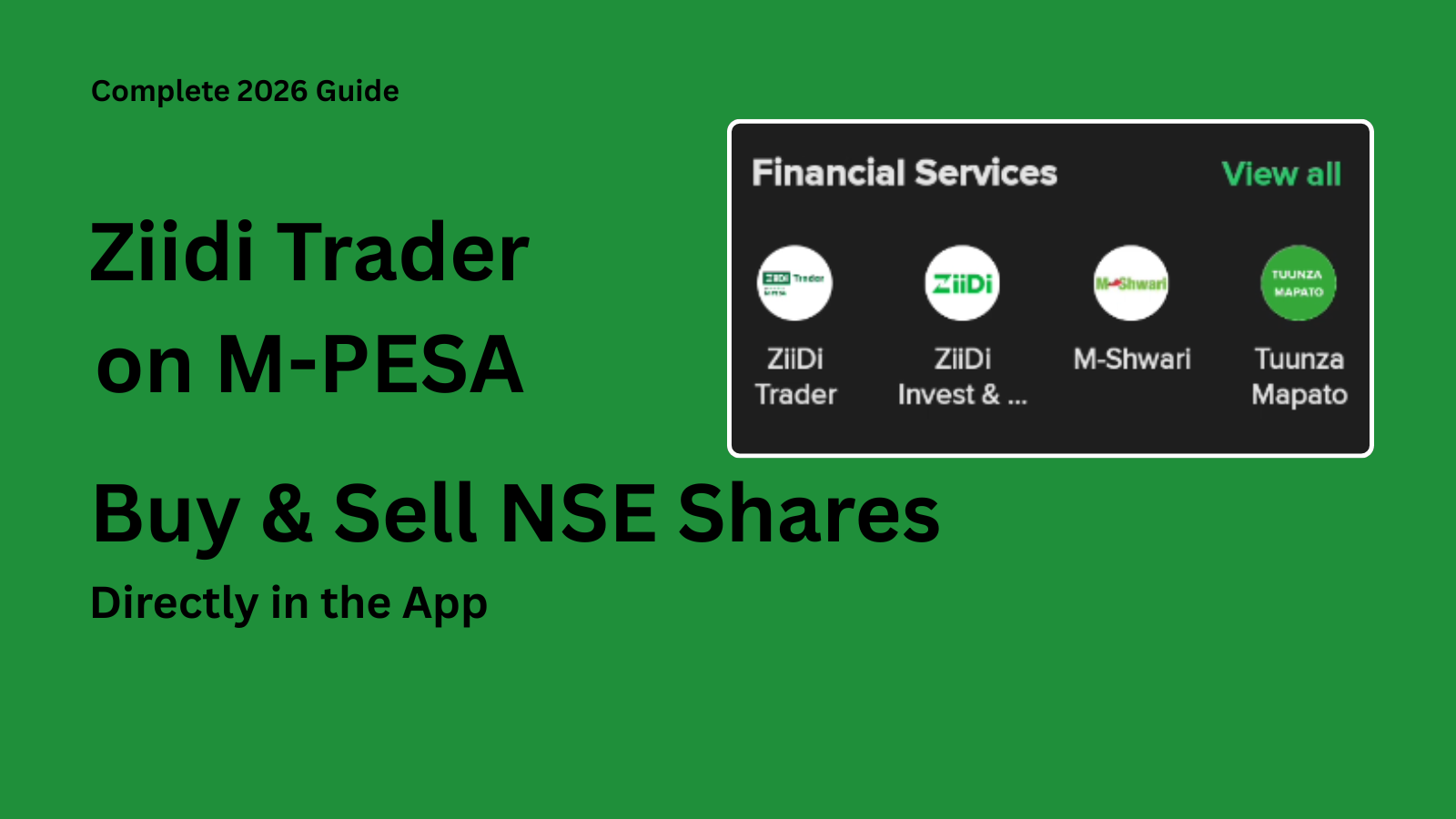
Ziidi Trader is Safaricom’s new NSE trading feature inside the My OneApp app, letting Kenyans buy and sell listed shares (and some bonds) directly from their phone.
If you’re searching “what is Ziidi Trader” or “how does Ziidi Trader work”, this guide breaks it down in plain English - including setup, order matching, pricing options, risks, and how Ziidi compares to money market funds. If you’d rather start with the shorter overview, read Ziidi Trader by Safaricom: how M-PESA is opening the NSE to everyday investors first.
Quick answers (Ziidi Trader)
Note: Some people search for “ziddi trader” - they usually mean Ziidi Trader by Safaricom.
- What is Ziidi Trader? A stock trading platform inside Safaricom’s My OneApp that lets you place buy/sell orders for NSE-listed shares.
- How does Ziidi Trader work? You activate it in My OneApp → place a buy/sell order → orders match during market hours → settlement follows the NSE process.
- Do you need a CDS account? No - Ziidi uses an omnibus structure (your ownership is tracked in-app).
- Is Ziidi Trader legit/safe? It operates within Kenya’s regulated market setup, but prices can fall and trades may not execute.
- Ziidi Trader not working? Most issues are market hours, verification/CDS details, app updates, or network problems.
- What is the Ziidi USSD code? Ziidi Trader does not currently have a USSD code. It is accessed through the Safaricom My OneApp app. The separate Ziidi Money Market Fund can be accessed through USSD by dialing
*334#and selecting Financial Services → Ziidi, or through the direct*334*5#route.
This is the complete 2026 guide.
What Is Ziidi Trader?
Ziidi Trader is a stock trading platform embedded within the Safaricom My OneApp app under Financial Services. It allows eligible M-PESA users to:
- Buy NSE-listed shares
- Sell listed shares
- Invest in corporate bonds
- Monitor portfolio performance
- Receive dividends directly via M-PESA
Ziidi Trader operates under oversight of the Capital Markets Authority (CMA), ensuring regulatory compliance and investor protection.
It builds on Safaricom’s expanding Ziidi investment ecosystem, which previously introduced:
- Ziidi Money Market Fund (MMF)
- Ziidi Shariah investment option
Ziidi Trader extends that ecosystem into listed equities and bonds.
How Does Ziidi Trader Work?
Here is the process step-by-step:
Step 1: Activation
- Open the Safaricom My OneApp app
- Select Ziidi Trader under Financial Services
- Accept terms and risk acknowledgment
- Complete identity verification
- Confirm with your M-PESA PIN
You must be 18 years or older and a registered M-PESA user.
Step 2: Placing a Buy Order
To buy shares:
- Tap Trade
- Select the listed company
- Enter quantity and price
- Choose pricing method (Best Price or Own Price)
- Confirm with M-PESA PIN
Funds are reserved immediately. Orders are matched on the NSE between willing buyers and sellers.
Step 3: Order Matching
Ziidi Trader does not guarantee execution. Trades are executed only when:
- A buyer and seller agree on price
- The order is matched within market hours
Orders are “Good Till Day,” which means they expire at 3:00 PM (market close). If not fulfilled by 3:00 PM, Funds are automatically reversed to your M-PESA wallet.
Do You Need a CDS Account for Ziidi Trader?
No. This is one of the most important structural differences. Ziidi Trader uses an omnibus account structure. Instead of each investor opening a personal CDS account:
- Safaricom works with a licensed broker (Kestrel Capital).
- Shares are held in a pooled CDS account.
- Individual ownership is recorded digitally within the app.
You still legally own your shares. However:
- Shares purchased via Ziidi Trader remain within the platform.
- They are not merged with shares in a separate CDS account.
For deeper details on the Safaricom + NSE setup, read: Ziidi Trader Safaricom: M-PESA + NSE explained
Ziidi Trader vs Traditional Brokerage
Traditional share investing required:
- Opening a CDS account
- Selecting a stockbroker
- Physical documentation
- Manual onboarding
Ziidi Trader removes these friction points.
However, it also centralizes execution through the app structure rather than giving direct broker-level access. For some investors, this is convenience, while for others, it may limit flexibility.
Ziidi USSD Code: Can You Access Ziidi Trader via USSD?
If you are looking for the Ziidi USSD code, it is important to distinguish between Ziidi Trader and the Ziidi Money Market Fund (MMF).
Ziidi Trader does not currently support USSD. To buy or sell NSE shares through Ziidi Trader, you need to use the Safaricom My OneApp and open Ziidi Trader under Financial Services.
The separate Ziidi Money Market Fund does support USSD. You can access it by dialing *334#, selecting Financial Services, and then choosing Ziidi. Safaricom also provides the direct *334*5# route for accessing Ziidi MMF.
So, if you dial *334# looking for Ziidi Trader, you will find the Ziidi investment/MMF service, not the NSE share-trading platform.
Ziidi Trader vs Ziidi USSD
| Service | USSD Access | My OneApp |
|---|---|---|
| Ziidi Trader | No | Yes |
| Ziidi Money Market Fund | Yes - *334# / *334*5# |
Yes |
To trade NSE shares, open My OneApp → Financial Services → Ziidi Trader.
Ziidi Trader App Features
Inside the app, users can:
- View listed NSE companies
- Place buy and sell orders
- Select pricing options
- Monitor portfolio value
- View corporate announcements
- Receive trade notifications
- Receive dividends via M-PESA
Everything is centralized within the M-PESA ecosystem.
Pricing Options Explained
Ziidi Trader offers two pricing mechanisms.
Best Price
- Buying: lowest seller price available
- Selling: highest buyer price available
Own Price
- Buying: maximum price you are willing to pay
- Selling: minimum price you are willing to accept
Execution depends entirely on supply and demand.
How Dividends Work
If you hold shares on the book closure date:
- You qualify for dividends.
- Dividends are paid directly via M-PESA.
This removes traditional brokerage payout delays.
When Are NSE Markets Open?
Nairobi Securities Exchange trading hours:
Monday – Friday
9:30 AM – 3:00 PM
Outside these hours, you can view your portfolio but cannot execute trades.
Ziidi Trader Not Working? Common Reasons
If Ziidi Trader is failing to place trades or showing errors, the most common causes are:
- Outside market hours (NSE is open Mon–Fri, 9:30 AM–3:00 PM)
- Verification still pending or details don’t match your ID records
- App needs an update (older My OneApp versions can bug out)
- Network issues (slow data can cause timeouts)
- No matching orders (your trade may be valid but not executed due to price/liquidity)
If the issue is execution-related, try using Best Price during market hours, or adjust your Own Price closer to market levels.
Can You Lose Money on Ziidi Trader?
Yes. Share prices fluctuate based on:
- Company earnings
- Market demand
- Economic conditions
- Investor sentiment
- Corporate actions
Ziidi Trader does not guarantee profits. If you sell below your purchase price, you incur a loss. Investing in shares carries risk.
Ziidi Trader vs Ziidi Money Market Fund
Many Kenyans confuse the two. Here is the core difference:
| Feature | Ziidi MMF | Ziidi Trader |
|---|---|---|
| Asset Type | Money Market Fund | NSE Shares & Bonds |
| Risk Level | Lower | Higher |
| Volatility | Low | Market-driven |
| Return Source | Interest | Capital gains + dividends |
| Suitable For | Conservative savers | Equity investors |
For a detailed comparison, read: Ziidi Trader vs Money Market Funds in Kenya
Who Should Consider Ziidi Trader?
Ziidi Trader may be suitable for:
- Long-term investors
- Individuals comfortable with market risk
- Investors seeking dividend income
- Younger investors entering capital markets
It may not be ideal for:
- Emergency savings
- Short-term funds
- Risk-averse investors
Risks Investors Should Understand
- Market volatility
- Execution risk
- Behavioral overtrading
- Concentration risk
- Lack of diversification
Access to markets does not eliminate risk.
Why Ziidi Trader Matters for Kenya’s Capital Markets
Ziidi Trader lowers structural barriers. With millions of M-PESA users, potential outcomes include:
- Increased retail participation
- Improved liquidity on NSE
- Expanded financial inclusion
- Higher public awareness of equities
However, financial literacy will determine long-term outcomes. Access is step one, Education is step two.
Final Thoughts
Ziidi Trader Safaricom represents one of the most significant retail investing developments in Kenya in recent years.
By embedding NSE trading inside M-PESA, it transforms capital markets access, simplifies participation, removes friction, and expands opportunity.
However, it does not remove risk. Understanding how Ziidi Trader works is essential. Learn the mechanics, start small, diversify, and think long-term..
FAQ
What is Ziidi Trader?
Ziidi Trader is a service inside the Safaricom My OneApp app that allows users to buy and sell shares listed on the Nairobi Securities Exchange.
Do I need a CDS account to use Ziidi Trader?
No. Ziidi Trader uses an omnibus account structure where shares are pooled but ownership is recorded individually within the platform.
How does Ziidi Trader work?
Users activate the service in the My OneApp app, place buy or sell orders, and trades are executed on the Nairobi Securities Exchange through market matching.
Can I lose money using Ziidi Trader?
Yes. Share prices fluctuate based on market conditions and company performance, and investing carries risk.
What is the Ziidi USSD code?
Ziidi Trader does not have a USSD code and is accessed through the Safaricom My OneApp app. The separate Ziidi Money Market Fund can be accessed by dialing *334# and selecting Financial Services, then Ziidi, or through the direct *334*5# route.
Disclaimer: This content is for general informational purposes only and does not constitute financial advice. Read the full disclaimer.