KPC IPO Update: Offer Hits Sh106.3B Target, Turns Oversubscribed as Uganda Locks 20.15% Stake
February 25, 2026
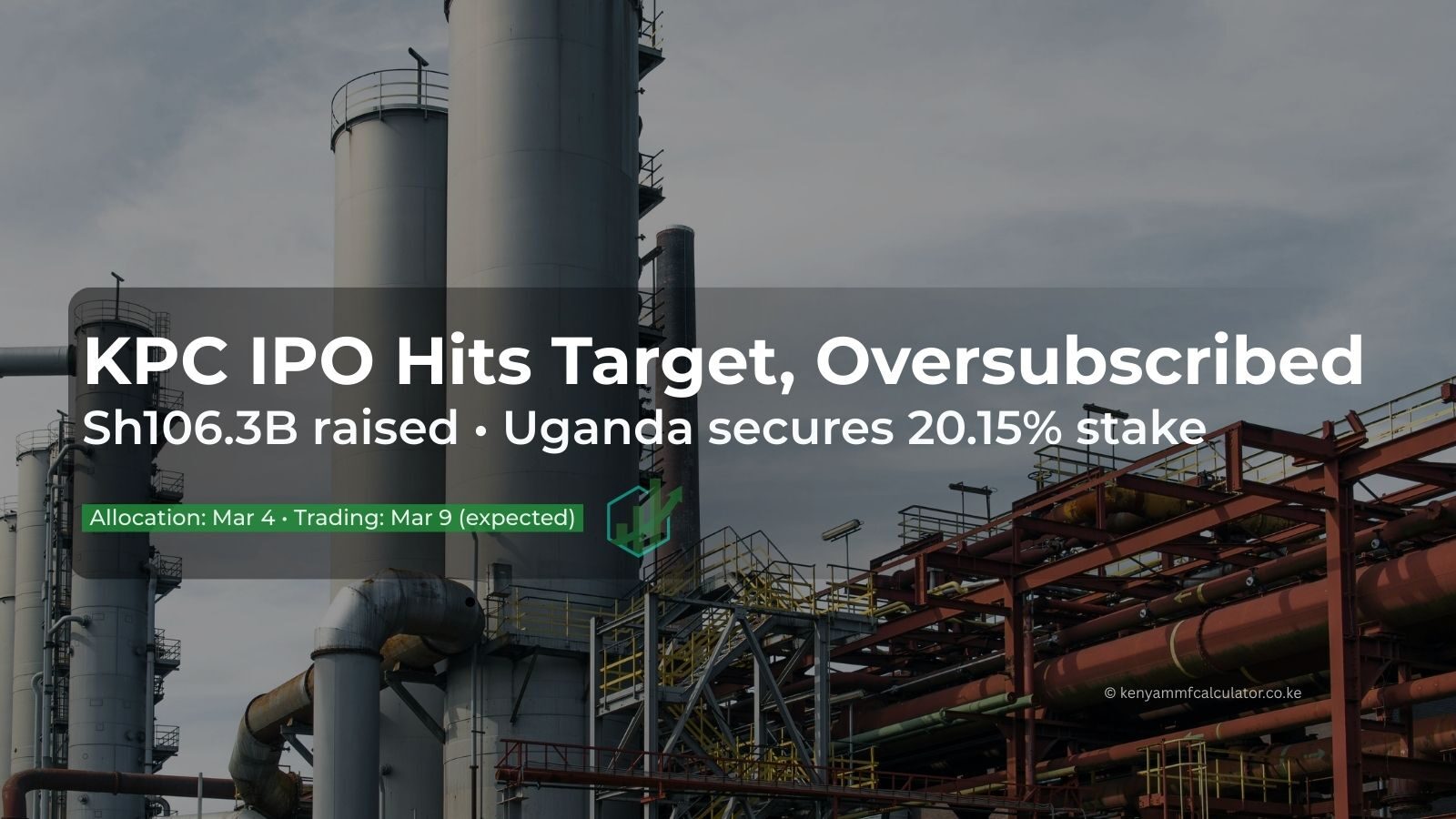
The Kenya Pipeline Company (NSE: $KPC) IPO has crossed a major milestone: the offer has reached the Sh106.3 billion target and is now being described as oversubscribed. For many investors, that headline is a relief, especially after weeks of mixed chatter around demand, valuation debates, and the decision to extend the offer window.
This update breaks down what the “oversubscribed” label actually means for allocation, why the deal appears to have been institution-led, how Uganda’s 20.15% entry changes the narrative, and what investors using platforms like Ziidi Trader should expect when they see statuses like “Pending Allocation.”
Quick recap: the offer structure in plain English
The IPO was structured as a major privatisation-style sale: the government offered 65% of KPC to the public at Sh9 per share, with 11.81 billion ordinary shares available. The stated fundraising goal was Sh106.3 billion, which is why this number keeps coming up in coverage and investor conversations.
The offer period ran for weeks and was extended by three working days to allow more participation - a move that matters because extensions often happen when deal teams want to widen access and maximise take-up across categories (retail, institutions, regional investors, and foreign investors).
Now that the window has closed, the market’s focus shifts from “did it sell?” to who got what, and what happens next. If you want the deeper background and valuation debate, see the earlier pieces here:
Oversubscription: good headline, but it changes your allocation
An oversubscribed IPO means there were more valid applications than shares available. That sounds great - and it often is a sign of strong demand - but it also increases the probability that many investors will receive:
- partial allocation (not all the shares you applied for), and/or
- refunds for the unallocated portion of your money.
This is where expectations matter. If you applied thinking you’ll automatically get your full request, oversubscription can be frustrating. But it’s also a normal IPO outcome, especially when large investors submit big applications near the end of the book-building window.
Why institutions likely mattered more than retail this time
One of the most important details in recent reporting is that the “extra” demand appears to have come largely from institutional investors - the kinds of buyers that can deploy large tickets in a single move (pension funds, banks, large asset managers, strategic investors, and corporates).
That matters because institutional-heavy books can behave differently after listing:
- Less immediate selling pressure (institutions often hold longer)
- Potentially thinner trading early on (fewer shares circulating day-to-day)
- Price discovery driven by a smaller “free float” if many shares sit with long-term holders
Retail demand still matters for liquidity, but it’s not unusual for institutional money to “save” a book - especially for large transactions where the number is huge in local currency terms.
The practical takeaway: even with oversubscription, early trading could still feel quiet if most shares are held tightly.
Uganda’s 20.15% stake: the twist that changed the story
A major subplot in this IPO is Uganda’s entry through Uganda National Oil Company (UNOC), with Uganda stating it secured a 20.15% stake in KPC.
Why this is significant:
- KPC is strategic infrastructure. It’s not just another consumer company - it’s a backbone asset for regional fuel logistics.
- Uganda is deeply linked to the corridor. Uganda’s petroleum supply chain relies heavily on the Kenya route (Mombasa → inland depots → onward distribution).
- It reframes the IPO beyond “investment returns.” Uganda’s stake is not only about dividends or price gains - it’s also about access, stability, and influence.
In other words, Uganda’s participation makes the IPO look less like a pure “public market trade” and more like a regional strategic positioning move.
The governance angle: veto rights and board influence
Alongside the stake, reporting has highlighted that Uganda negotiated governance protections — including veto-style influence over certain major decisions, such as leadership changes and dilution risk (new share issuance). Whether you view that as positive or negative depends on your lens:
- Positive: A strategic investor demanding governance safeguards can increase predictability on tariffs, policy shifts, and strategic direction.
- Risk: Any special rights can create complicated power dynamics between government objectives, private investor expectations, and regional interests.
For investors, the key point is simple: governance headlines could remain a recurring driver of sentiment around the stock.
What happens next: allocation, refunds, then listing
After close, the process typically moves through three stages:
- Reconciliation of applications
- The deal team matches broker/platform submissions, verifies categories, removes invalid duplicates, and finalises totals.
- Allocation announcement
- This is when investors find out how many shares they actually got.
- If you applied for 100 shares, you might get 100, or 60, or 0 - depending on category rules and oversubscription levels.
- Crediting & refunds
- Successful allocations are credited.
- Excess funds (from unallocated shares) are refunded based on the platform/broker processes.
After allocations and credits settle, trading is expected to begin on the NSE on the communicated listing date.
Ziidi Trader status: “Pending Allocation” explained (and what to do)
If you bought through Ziidi Trader and you’re seeing “Pending Allocation,” that typically means the platform is waiting for the official allocation results to be published and processed before it can update your holdings and wallet balance.
If you’re new to Ziidi Trader, here’s the full walkthrough of how the feature works inside M-PESA, including where orders, IPO applications, balances, and confirmations appear: Ziidi Trader Complete Guide (Kenya).
What you should do right now:
- Do nothing until the allocation date passes. Pending status is normal in this window.
- Check for platform notifications in the app (some platforms push a message once allocation/refunds are completed).
- Watch your cash balance and portfolio holdings (refunds often appear as a balance credit, while shares appear as a holding).
One note: if your app shows a strange countdown (like a very long “bidding closes in … days” message), treat that as a display issue, not a real extension. The only dates that matter are the official IPO notices and the confirmed allocation/listing schedule your platform shares.
If your status remains pending well after allocations are supposed to be out, that’s when it makes sense to contact support with your transaction reference.
What to watch after listing: price, liquidity, and headlines
Once KPC starts trading, investors will be watching three things closely:
1) Price behaviour around the IPO price (Sh9)
The market will quickly decide whether Sh9 feels cheap, fair, or expensive based on:
- expected dividends
- tariff policy and regulation
- governance structure
- future capex plans
- macro liquidity at the NSE
2) Liquidity and spread
If big investors hold tightly, early sessions can show:
- fewer shares offered for sale
- wider bid/ask spreads
- sharper moves when volume finally hits
3) Policy and regional geopolitics
Because this is strategic infrastructure and now includes a major regional stakeholder, headlines can move sentiment quickly - even when fundamentals haven’t changed.
Bottom line
The IPO hitting the Sh106.3 billion target and being labelled oversubscribed is a strong finish - especially given the public debate during the offer period. But the next phase matters just as much: allocation outcomes will determine how many retail investors actually become shareholders, and how liquid the stock feels once it lists.
Uganda’s 20.15% stake adds a strategic layer that can cut both ways: it can strengthen confidence in long-term stability, but it can also introduce governance complexity that the market will need to price in over time.
If you applied through Ziidi Trader and you’re seeing Pending Allocation, that’s normal right now. The real moment comes when allocations are published, shares are credited, refunds are processed, and the stock begins trading on the NSE.
Disclaimer: This content is for general informational purposes only and does not constitute financial advice. Read the full disclaimer.